Wildlife and electrical infrastructure share the same space, and that relationship has an impact on electric reliability. Animals can cause outages by chewing on lines, building nests on equipment, or creating unintended electrical paths. At Unitil, wildlife is responsible for roughly 13%* of power outages across our service territory, making it a common cause of service interruptions. Most animal-related outages occur in the spring and the fall when animals are most active.
Why Squirrels and Birds Can Touch Power Lines
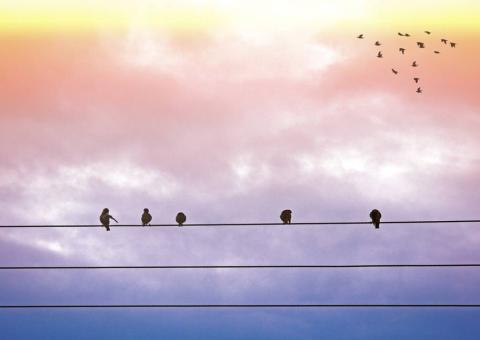
You’ve probably seen a squirrel dart across a power line, or a row of birds settled comfortably on a wire. So why don’t they get shocked? It comes down to how electricity moves.
Electrical current needs a complete path to flow from an energized source to the ground. When a squirrel or bird touches a single wire, that path isn’t completed. There’s no way for the current to get to the ground, so the animal isn’t impacted.
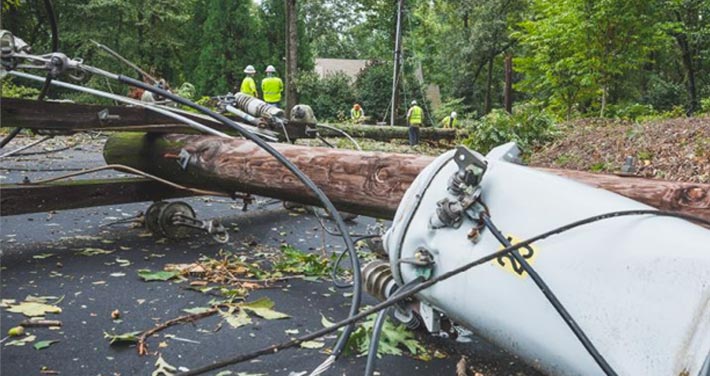
People are a different story. In most cases, anyone who contacts an energized line will also be touching something grounded (a pole, a ladder, or the earth itself), completing the circuit through their body. To stay safe, always keep at least 10 feet away from overhead powerlines, and at least 30 feet away from downed power lines. If you see a downed line, report it to us immediately.
When Wildlife Contact Causes Trouble
Not every animal encounter with electrical equipment ends harmlessly. Animals that bridge two conductors at once, or contact both an energized line and a grounded surface, can cause outages and, unfortunately, serious harm to themselves. Squirrels are among the most frequent culprits, given the way they navigate across lines and equipment. Large birds, like raptors and herons, are especially vulnerable due to their wingspan relative to conductor spacing.
Animals can also cause outages by chewing on lines and building nests on equipment. Even underground lines can be impacted. Burrowing animals like groundhogs and rodents can damage infrastructure over time, leading to outages that are more time consuming to repair.
How We Work to Protect Both Service and Wildlife
We take a proactive approach to keeping animal-related outages in check by using a variety of protective equipment designed to prevent animals from making contact with energized equipment. Transformer guards have sharp ends that deter squirrels from climbing on them. Diverters are a series of plastic baffles that direct birds and critters away from our wires and equipment. Utility pole caps deter wildlife from landing on top of poles while protecting the pole from moisture.
In limited areas where nesting species are particularly active, we have utilized a different pole configuration to prevent nesting on equipment.
These measures do double duty: they help maintain reliable service and reduce harm to wildlife.
You Can Play a Role Too
- Set or move your feeders away from power lines.
- Avoid clearing dead trees in the spring and early summer while animals are nesting.
- Let us know if you spot unusual animal activity, like a large nest near power lines, utility poles, or other electrical equipment. Early reporting helps us respond quickly.
Shared Space, Shared Responsibility
Wildlife and electrical infrastructure will always coexist. We work to manage this relationship thoughtfully, keeping the lights on while being good stewards of the environment around us.
Key Takeaways:
- Wildlife accounts for roughly 13%* of outages in Unitil’s service territory.
- Squirrels and birds can touch a single power line safely because they don’t complete an electrical circuit, but that protection doesn’t apply to people. Always keep your distance from power lines and never approach a downed wire.
- Unitil installs protective equipment like transformer guards and diverters to reduce animal-related outages.
* Percentage based on 2021-2025 stats.